
Renault Trucks Develops Cutting-Edge Engine Technology
Posted On: 25 January 2017
Truck engines are increasingly expected to be both powerful and efficient while also complying with current emissions standards or even exceeding them to provide an added layer of future-proofing. And until recently, the bottle necks holding engines back were largely mechanical, with designers hampered in their efforts by the limits of current manufacturing techniques.
Renault Trucks is looking to overcome this through the use of 3D printing technology that can fashion metal parts from the ground up rather than having to use traditional solutions such as forges, moulds and presses, according to UK Haulier.
Engineers at its facility in the French city of Lyon have been working on next-generation power trains through the use of so-called 'metal additive manufacturing', which is effectively an equivalent of 3D printing. And real progress is being made, as the team have actually managed to develop working parts which have been integrated with existing Renault truck engines.
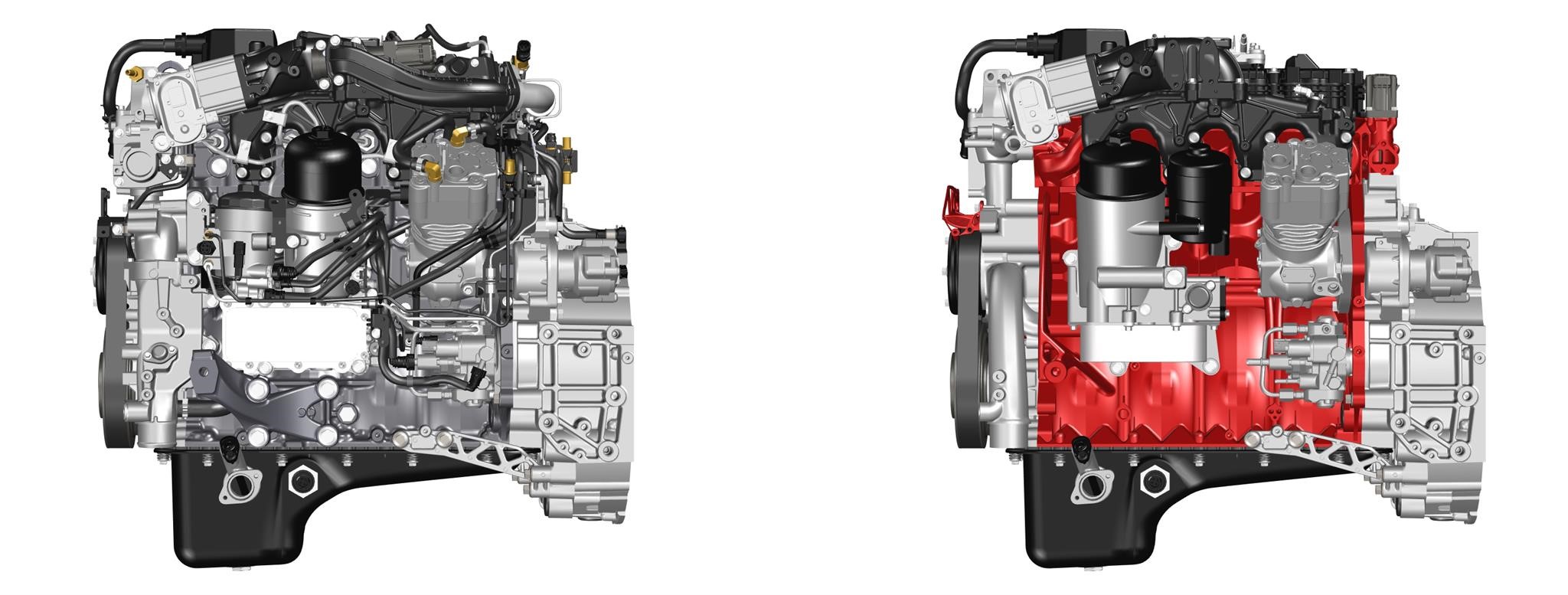
Project spokesperson Damien Lemasson said that the primary goal was to show that it was possible to 3D-print metal components for engines and thus minimise the weight of the entire unit by up to a quarter.
The resultant 120kg saving should not only improve performance but will also mean that the lighter engine will be less of a factor in terms of fuel consumption. So trucks could soon come equipped with more compact and efficient engines that can still do the same work as their larger predecessors.
Lemasson went on to say that the 3D printing technique used to manufacture the components had already proven itself to be viable in terms of the reliability and ruggedness of the resultant creations. This means that it is not merely a promotional exercise but rather one which is likely to lead to real change in the way engines are designed and built in the near future.
In terms of truck engines, the use of 3D printing allows designers to optimise the size and format of components, as well as making it easier to actually put the engine together at the manufacturing stage. So it is something that many truck firms might choose to embrace in the near future.
By creating components layer by layer, shapes and configurations which would normally be impossible to achieve can in fact be attained without any problems.
For the time being, it is likely that metal 3D printing will only be used for smaller manufacturing projects operated by Renault Trucks, but further down the line it is likely to be rolled out more widely.
Being able to print out the required part locally means that issues with stock levels can be overcome, showing just how just how much of an impact this technology is sure to have on the HGV industry in the next decade.
Renault Trucks is looking to overcome this through the use of 3D printing technology that can fashion metal parts from the ground up rather than having to use traditional solutions such as forges, moulds and presses, according to UK Haulier.
Engineers at its facility in the French city of Lyon have been working on next-generation power trains through the use of so-called 'metal additive manufacturing', which is effectively an equivalent of 3D printing. And real progress is being made, as the team have actually managed to develop working parts which have been integrated with existing Renault truck engines.
More Compact Engines
Project spokesperson Damien Lemasson said that the primary goal was to show that it was possible to 3D-print metal components for engines and thus minimise the weight of the entire unit by up to a quarter.
The resultant 120kg saving should not only improve performance but will also mean that the lighter engine will be less of a factor in terms of fuel consumption. So trucks could soon come equipped with more compact and efficient engines that can still do the same work as their larger predecessors.
Lemasson went on to say that the 3D printing technique used to manufacture the components had already proven itself to be viable in terms of the reliability and ruggedness of the resultant creations. This means that it is not merely a promotional exercise but rather one which is likely to lead to real change in the way engines are designed and built in the near future.
In terms of truck engines, the use of 3D printing allows designers to optimise the size and format of components, as well as making it easier to actually put the engine together at the manufacturing stage. So it is something that many truck firms might choose to embrace in the near future.
By creating components layer by layer, shapes and configurations which would normally be impossible to achieve can in fact be attained without any problems.
For the time being, it is likely that metal 3D printing will only be used for smaller manufacturing projects operated by Renault Trucks, but further down the line it is likely to be rolled out more widely.
Taking an Idea Forward
Last year the use of 3D printing to create truck components was also put forward as an idea by Mercedes-Benz, although in this instance the focus was not on building new engines but instead on supplying replacement parts to customers around the world.Being able to print out the required part locally means that issues with stock levels can be overcome, showing just how just how much of an impact this technology is sure to have on the HGV industry in the next decade.